ARCHIVE 001 · CHAPTER I
INSOMNIA
Before Graham owned the future, he was simply a man who could no longer sleep.
On a hot afternoon near Boscastle, the artist Isbister finds a stranger sitting alone above the Cornish sea.
The setting is almost offensively beautiful. Below them the water moves beneath the cliffs, sunlight flashes across the coast, and the entire landscape seems to offer precisely the sort of peace the stranger cannot find within himself.
His appearance immediately troubles Isbister. The man's eyes are red, his face exhausted, his movements drained of energy. He has been walking the coast alone for days.
Then he explains why.
He has not slept for six nights. Not badly. Not briefly. Not at all.
Doctors have offered drugs, but drugs helped create the problem in the first place. He had driven himself through intense work by forcing his exhausted body to continue long after it demanded rest. Coffee, stimulants and sheer determination allowed the mind to keep working.
Now the work is finished. The mind refuses to stop.
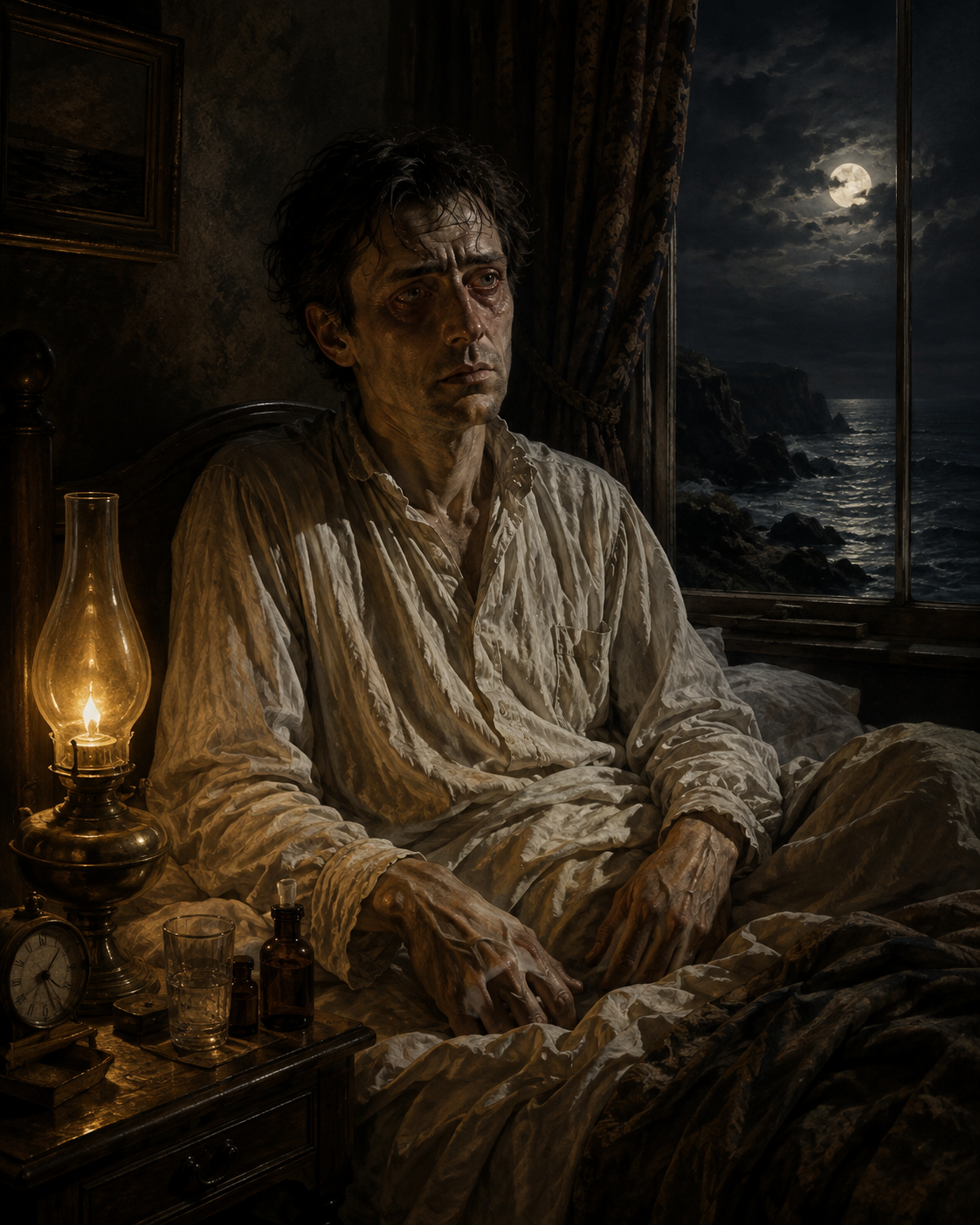
Isbister is not a doctor. He has no miraculous solution. What he possesses is something much more ordinary: company.
He stays.
The stranger begins speaking with the intensity of someone who has been alone with his thoughts for too long. He describes his mind as something spinning endlessly, thoughts racing without progress, circling the same centre until he fears that sanity itself will give way.
Sleep has ceased to be merely rest. It has become escape.
For a moment his despair becomes dangerous. He looks toward the cliffs and imagines that death, if nothing else, would finally silence the mind. Isbister answers not with solemn philosophy but with awkward practicality, even humour. A leap from a cliff, he points out, is not necessarily the clean ending a desperate imagination promises.
The interruption matters. The conversation continues.
Isbister gradually takes charge of the stranger almost by accident. He persuades him away from the cliffs and walks with him back toward Boscastle.
But something is changing.
The sleepless man's speech becomes fragmented. His steps grow uncertain. He complains of a weight descending through the turmoil inside his head — not ordinary drowsiness, but something darker and deeper.
Isbister brings him back to his room. Perhaps companionship, cigarettes, food or simple quiet will finally help.
The stranger sits heavily in an easy chair. He leans forward. His head rests against his hands.
And then he becomes completely still.
At first Isbister is relieved. After six impossible nights, surely sleep has finally arrived.
He moves around the room quietly. He tries not to disturb his guest. He waits.
Minutes pass.
The stillness begins to feel wrong.
Isbister steps outside, returns, watches through the window, smokes his pipe and gives the stranger time. Evening settles around the house. The harbour grows quiet. The figure in the chair does not move.
Eventually curiosity becomes unease. Unease becomes fear.
Isbister approaches the chair.
He listens.
There is no sound of breathing.
The stranger's eyes are open, but the pupils have rolled upward beneath the lids. His body is rigid and unresponsive.
Isbister shakes him.
For one terrible moment he believes the man is dead.
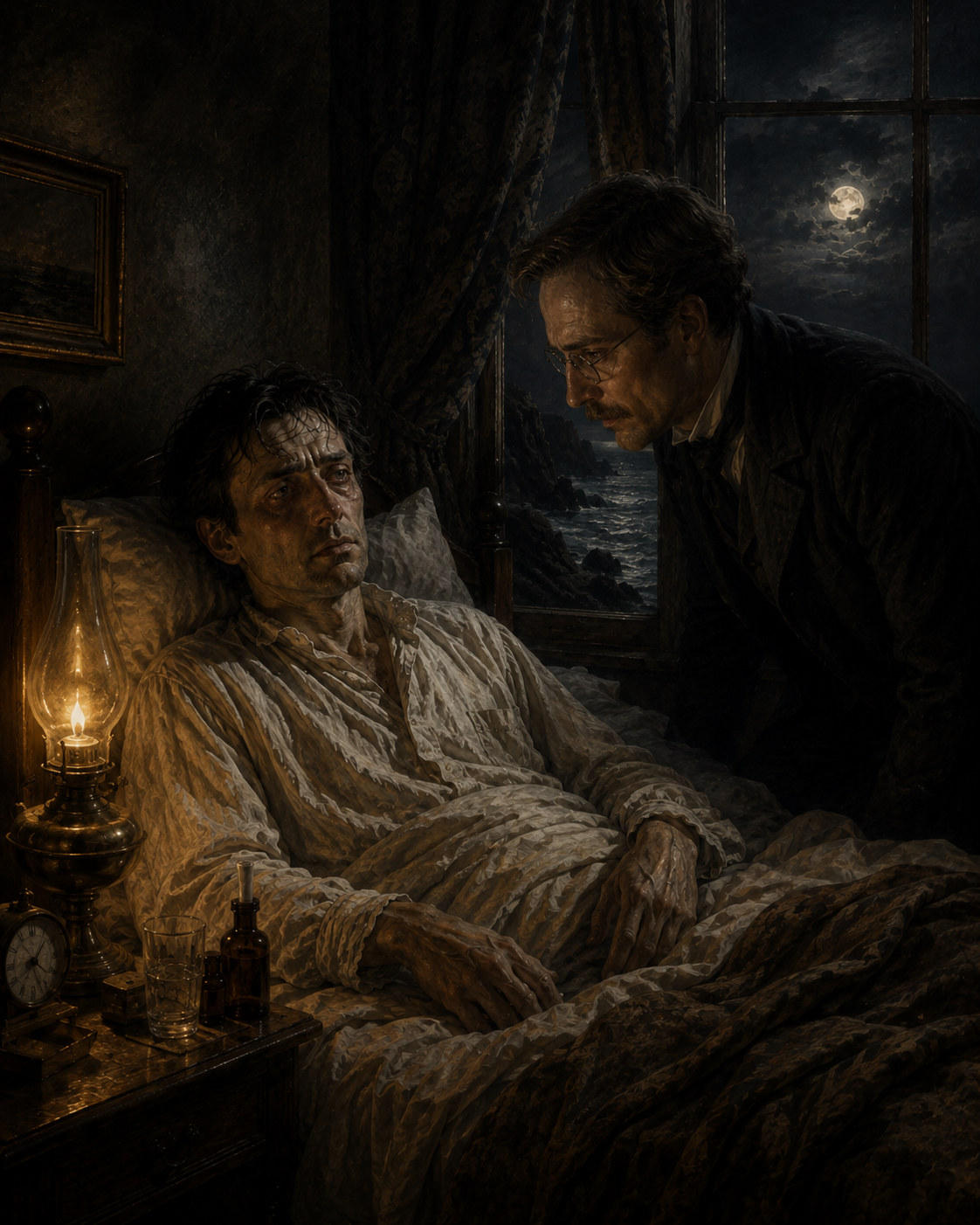
Isbister calls for light and sends for a doctor.
The six sleepless nights are over.
But Graham has not fallen into ordinary sleep.
He has entered a trance from which no one will be able to wake him.
The world will continue without him.
Years will pass.
Then generations.
And while Graham remains perfectly still, something else will continue moving.
His property.
Wells begins his future story in an unexpectedly intimate place: not with machines, politics or spectacle, but with mental exhaustion. Graham reaches the future only because his desperate search for sleep becomes something physically impossible.