ARCHIVE 001 · CHAPTER 18
GRAHAM REMEMBERS
Helen explains what the Sleeper has meant to generations of people—and asks whether Graham is prepared to become more than their myth.
NO PRIOR KNOWLEDGE REQUIRED · RECORDS 035—036For three days Graham has explored machines, flight and elite society while Ostrog controlled the new government and filtered news of unrest. Helen's warning—that the people remain oppressed—has drawn him back.
Helen is waiting in a quiet gallery when Graham finds her.
The gallery runs between the wind-vane offices and Graham's state apartments, with arched openings overlooking a court of palms.
Helen rises when she hears him and loses colour at the sight of him. She has clearly come intending to speak, yet the reality of addressing the Master leaves her momentarily unable to begin.
Graham helps by returning to their unfinished conversation.
She told him not to forget the people. He asks her to explain.
Helen's first answer is an accusation: he has forgotten.
Graham protests that he does not understand enough to remember or forget. Helen agrees that he does not understand what he is.
To Graham, the trance is a medical accident and the title Master is an unbelievable inheritance.
To generations born during his sleep, the Sleeper became something closer to prophecy.
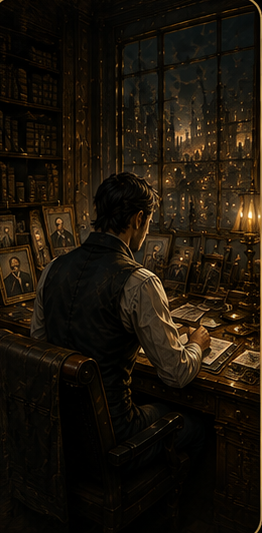
GRAHAM REMEMBERS
Helen restores the human history hidden beneath Graham's public legend.
People prayed for him to wake.
They compared him to legendary rulers expected to return at the moment of greatest need. The phrase 'when the Sleeper wakes' carried both scepticism and hope.
On the first day of each month, the sleeping body was displayed in white robes while crowds filed past.
Helen saw Graham there as a child.
His still face seemed to her patient and waiting, as though history itself had not yet answered.
That belief gives Graham power no legal document can fully explain.
Kingship, he observes, exists partly in the minds of those who obey. Helen answers that such belief is real if he dares to act through it.
Ostrog can administer, plan and command armed forces. He cannot inherit the reverence attached to a man who crossed two centuries.
The people do not merely want Graham's signature.
They want him to take responsibility.
Helen begins describing the world beneath the reception halls.
The great cities are prisons for much of their population. The blue canvas garment marks those attached to the Labour Department.
The Department began as a system for dealing with poverty: food and shelter in exchange for labour.
Over time it absorbed people who lacked property, credit or independent employment.
Relief became permanent dependence.
A person who enters blue canvas rarely leaves it.
Children inherit obligations. Wages, housing and survival are controlled within the same structure. The system claims to have abolished destitution because nobody need starve outside it.
The choice, however, is often blue canvas or prison.
The language of welfare hides a labour system from which meaningful exit has disappeared.
Graham hears an echo of his own century's workhouses, enlarged and perfected by two hundred years of administration.
Helen explains why the revolution is not over.
Ostrog revived hopes of equality and freedom in order to move the Labour Companies against the Council. Now workers refuse to return quietly to the old conditions.
They will not disarm. They expect the Sleeper to fulfil promises made in his name.
Ostrog awakened more than a man.
He awakened expectations he may not be able to contain.
Graham doubts himself.
He has power that feels unreal, no understanding of the institutions and no certainty that one person can improve such a vast system.
Helen does not promise a simple victory. She asks him to lead the desire already present in millions of people.
Graham finally makes a limited, human decision rather than claiming to solve the world.
He will try to do something more right than wrong.
He will rule rather than remain Ostrog's ornament.
And one thing, he promises, must end: Labour slavery.
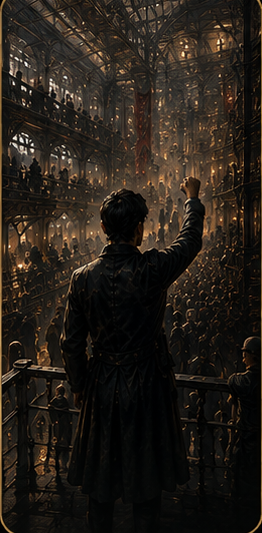
LABOUR SLAVERY SHALL END
Graham makes his first independent political promise and places himself on a collision course with Ostrog.
Then Graham reveals the loneliness beneath the title.
If he is to challenge Ostrog, he needs help from someone who will tell him what others conceal.
Helen agrees.
They arrange to meet again after he questions Ostrog and sees the city for himself.
Graham walks toward the wind-vane office no longer fascinated by the idea of being Master.
For the first time, he is preparing to accept its cost.
What is the Labour Department?
It is a vast institution that provides food, shelter and work to people without independent means. Because it controls all three together, dependence becomes hereditary and difficult to escape. The system can claim that nobody is destitute while still denying workers meaningful freedom.
Why this chapter matters
Helen does not simply give Graham information. She explains why millions have already invested moral meaning in him. His power rests partly on wealth, partly on law and partly on belief.
FOR READERS REVISITING WELLS
The revised novel deliberately treats Graham and Helen without a conventional romance. Their connection is moral and generational: she remembers the sleeping symbol from childhood, while he needs her faith and knowledge to act in an age where he is otherwise alone.