ARCHIVE 001 · CHAPTER 11
THE OLD MAN WHO KNEW EVERYTHING
Lost in a powerless city, Graham meets a stranger who misunderstands almost everything—and finally explains the one thing Graham most needs to know.
NO PRIOR KNOWLEDGE REQUIRED · RECORDS 021—022The Council cut London's lights as the people marched in Graham's name. In the battle that followed, Graham was separated from Lincoln and left alone among stopped Moving Ways, darkness and armed crowds.
A cough in the darkness introduces the first person Graham can question without guards, ceremony or political choreography.
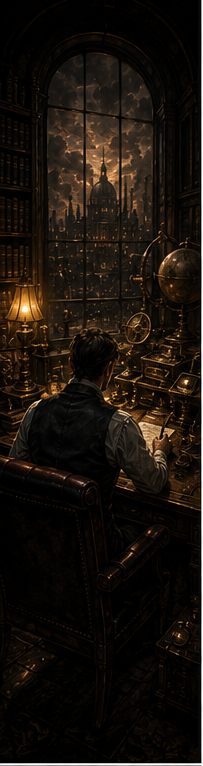
THE OLD MAN
A frightened citizen becomes Graham's first accidental historian of the new age.
The voice belongs to an old man huddled in the recess of one of the upper Ways. He is frightened, angry and relieved to discover that he is not alone.
He complains that the lights have failed, that fighting fills the city and that his three sons may be somewhere beneath the wind vanes. Like Graham, he is trying to build a picture of the crisis from rumours.
Unlike Graham, he possesses an entire lifetime of assumptions about the future.
That makes him both useful and unreliable.
Graham speaks carefully, trying not to reveal how little he understands. He asks about Ostrog, the Council and the forces moving through the city.
The old man calls Ostrog the greatest Boss alive. The Council rejected him twice, he explains, and now Ostrog has raised the Labour Companies against them.
The term Boss is more than an insult or title. It describes a political organiser capable of directing institutions, crowds and patronage.
To the old man, Ostrog's victory is almost inevitable. He has spent years preparing the machinery of revolt.
Then the old man offers a secret.
The real Sleeper, he says, died years ago.
The man shown to the public must be a drugged substitute, and Ostrog must have arranged the awakening as part of his political plan.
Graham is startled enough to wonder whether some fragment of the claim could be true. His return to consciousness was abrupt, and he knows nothing about the medical treatment applied during his trance.
But the old man's certainty rests on gossip, speculation and the pleasure of possessing forbidden knowledge.
The conversation becomes stranger and more useful as it continues.
The old man remembers when printed books were common enough to destroy. He claims sanitation companies burned them for industrial material, leaving physical books rare in an age of recorded cylinders.
He speaks of elections, bosses, Labour Companies and generations of political conflict as if assembling history from family stories.
Graham listens for facts beneath prejudice and exaggeration.
For the first time, he can ask elementary questions without immediately being silenced.
Gradually the old man explains how the sleeping estate became a world power.
Warming, Graham's cousin and trustee, eventually left his own property to the Sleeper. Isbister also contributed money. Other fortunes followed.
The fund passed into the hands of twelve trustees. Each generation managed an estate that continued buying land, debt, transport, food systems, media and industry.
Because Graham did not die, ownership never broke apart through ordinary inheritance. Because he did not wake, the owner never challenged the trustees.
Capital accumulated continuously while human lives began, aged and ended around it.
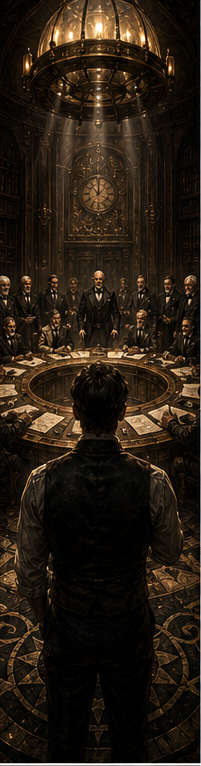
THE TWELVE TRUSTEES
Twelve administrators turned uninterrupted capital accumulation into an unelected government.
The Twelve Trustees became more than financial administrators.
People, companies and governments depended on payments controlled by the estate. Whoever directed Graham's property could reward obedience, withhold credit and absorb competitors.
The trustees evolved into the White Council.
Their political power did not replace the fortune. It grew from it.
Graham finally understands the system in one brutal sentence: his property became so large that the people managing it became rulers of the world.
Ostrog's revolution, the old man explains, turns that structure against itself.
If the Council governs as Graham's trustee, then a living Graham can be used to declare the Council illegitimate.
The people do not need to understand every financial instrument. They need only believe that the true owner has returned and that the trustees have betrayed him.
Graham has been transformed into a legal argument millions of people can chant.
At last he tells the old man who he is.
He describes the vanished countryside of hedges, inns and small fields, then says that he fell asleep there and woke four days ago.
The old man refuses to believe him. The real Sleeper, he insists, would never be allowed to wander alone through darkness.
Graham's frustration breaks into laughter. He is two centuries out of time, supposedly owns the buildings around him, and cannot persuade one frightened citizen that he is himself.
The old man begs him not to leave. Graham hesitates, realises he has already said too much, and walks away.
Now, however, he knows where he must go.
He must find Ostrog.
How can trustees become rulers?
Trustees normally manage property for someone else. In Graham's case, the property kept expanding for generations while the owner remained unable to intervene. As businesses, debt and essential systems became dependent on the estate, decisions about property became decisions about society. The Council's political authority is therefore built on financial control.
Why this chapter matters
The old man is deliberately comic, prejudiced and unreliable, yet he provides the clearest explanation Graham has received. Knowledge in this world does not arrive from the official experts. It survives in fragments carried by people whom authority would dismiss.
FOR READERS REVISITING WELLS
The chapter's title is ironic. The old man does not know everything; he merely believes he does. Wells uses his errors to make the accurate parts of his history feel discovered rather than delivered as neutral exposition.